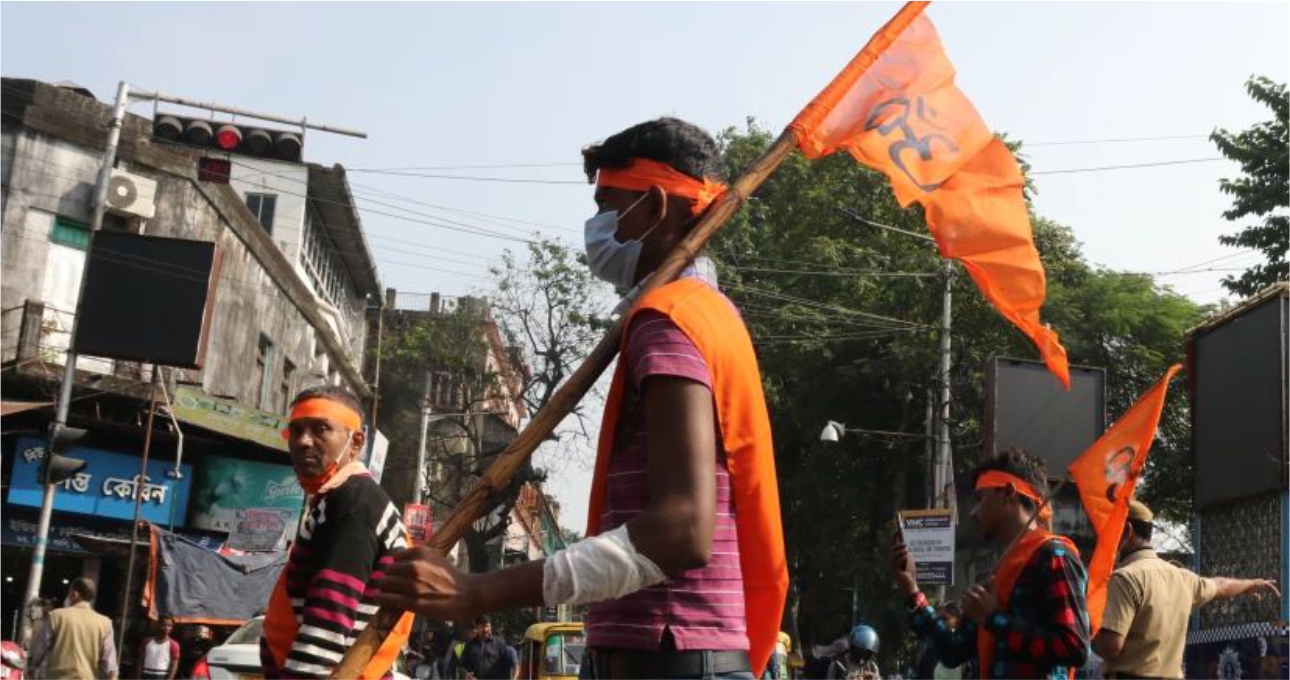
Communal tension has intensified in Nepal’s southern border region after violent clashes involving Hindu and Muslim groups left at least three people dead and more than two dozen injured. The unrest reportedly began in Dewanganj, Sunsari district, following a dispute over loud music and the replacement of a Muslim community flag with a Hindu religious flag near a temple. Police used warning shots and later live ammunition as stone-pelting and vandalism spread. Curfews and prohibitory orders were imposed in several sensitive towns to prevent further violence.
Some local residents and online commentators have alleged that individuals connected to Hindu nationalist groups crossed from India or encouraged the confrontation. However, Nepali authorities have not publicly confirmed that an “Indian intruder” organised the violence, and the nationality, affiliation and role of every suspected participant remain under investigation. Reports have documented growing cross-border religious mobilisation and the presence of organisations influenced by Indian Hindutva politics in Nepal’s Terai region, but representatives of these groups reject accusations that they deliberately provoke communal conflict. Describing all participants as extremists without verified evidence could deepen tensions and obstruct a fair inquiry.
Prime Minister Balendra Shah has appealed for peace and promised a transparent investigation, while security forces remain deployed in affected districts. The government has announced financial assistance for the families of those killed and urged citizens not to circulate inflammatory videos, rumours or religious accusations. Community leaders have called for impartial arrests, protection of mosques, temples and local businesses, and permanent interfaith committees to resolve disputes over processions, flags and loudspeakers. The incident highlights the need for stronger border monitoring and accountable policing, but responsibility should be established through evidence rather than communal identity. Residents have been asked to cooperate with investigators and reject retaliation while normal life is gradually restored across the troubled region.