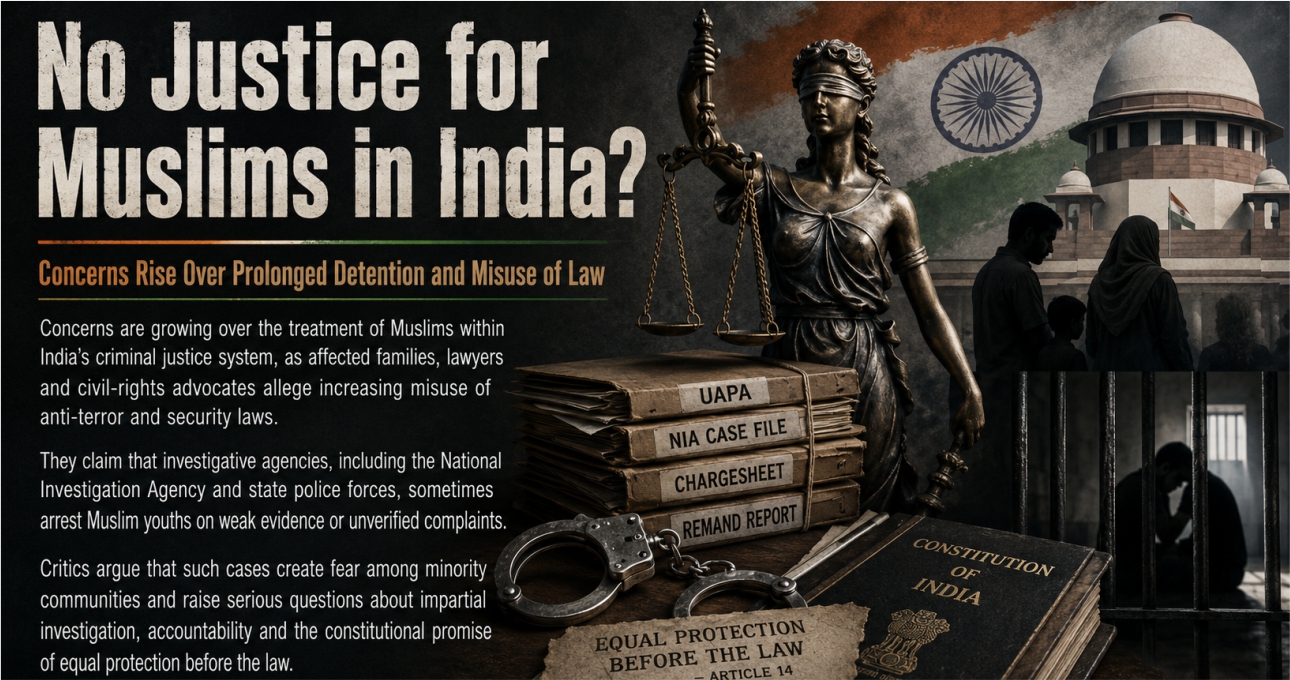
Concerns are growing over the treatment of Muslims within India’s criminal justice system, as affected families, lawyers and civil-rights advocates allege increasing misuse of anti-terror and security laws. They claim that investigative agencies, including the National Investigation Agency and state police forces, sometimes arrest Muslim youths on weak evidence or unverified complaints. Critics argue that such cases create fear among minority communities and raise serious questions about impartial investigation, accountability and the constitutional promise of equal protection before the law.
Another major concern is the prolonged imprisonment of undertrial prisoners. In several cases, accused persons have reportedly spent five to eight years in jail before being acquitted or released due to insufficient evidence. During this period, they may lose employment, education, family relationships and important years of their youth. Lawyers also point to delays in trials and difficulties in securing bail, particularly in cases registered under stringent laws. Allegations of unequal treatment during prosecution and bail hearings have further weakened public confidence in the justice system, although every case must be assessed on its individual evidence and judicial record.
When an innocent person is released after years of imprisonment, there is often no automatic compensation, rehabilitation or formal apology. Action against complainants who make deliberately false allegations, or officers who conduct negligent investigations, is also rare. Legal experts and rights advocates are therefore demanding time-bound trials, independent reviews of disputed cases, accountability for investigative misconduct and compensation for wrongful imprisonment. Justice must not depend on religion, social status or political influence. A democratic country can protect national security while also ensuring that no citizen is punished without credible evidence, a fair investigation and a speedy trial.