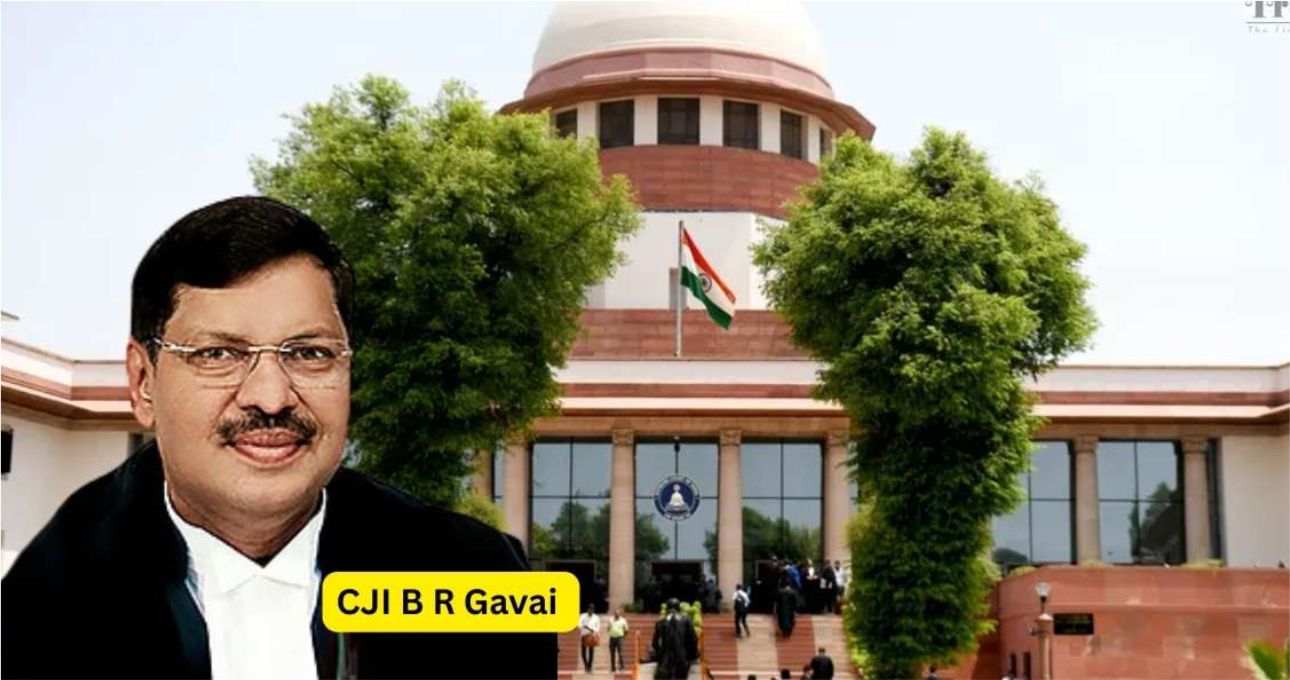
In a shocking incident that has shaken the nation, an attack on the Chief Justice of India (CJI) during an ongoing court session has triggered widespread condemnation and deep concern about the safety of judicial officers in the country. The incident, described by many as a reflection of rising intolerance and hate-driven actions, has ignited debate about the state of law and order and the impartial application of justice across all social groups.
According to preliminary details, the accused reportedly belongs to a dominant social group, while the CJI, who represents a Dalit background, has long been viewed as a symbol of judicial integrity and social equality. Observers and civil society activists argue that the muted official response and absence of immediate legal action reveal systemic bias within sections of law enforcement and politics.
Several legal experts and human rights defenders have expressed disappointment over the lack of a First Information Report (FIR) even after the alleged attack. They contend that if the situation were reversed—if the accused belonged to a marginalized group and the victim came from an upper caste—stronger laws such as the National Security Act (NSA) might have been invoked instantly.
Critics claim that such selective enforcement of justice reflects broader issues of caste-based discrimination and political influence within governance. They further allege that elements of religious nationalism and extremist ideologies are contributing to a culture of hate and impunity, where some individuals feel protected by political or ideological affiliations.
The incident has also sparked a larger conversation about the safety of vulnerable communities, especially Dalits, who continue to face social and institutional prejudice despite constitutional safeguards. “If the country’s highest judicial authority is not safe from intimidation or attack, what protection can an ordinary Dalit citizen expect?” asked one activist, emphasizing the need for stronger institutional accountability.
Political parties, social organizations, and citizens across the nation are demanding a transparent investigation, strict legal action, and protection for the independence of the judiciary. Many have urged the government to reaffirm its commitment to the Constitution’s core principles of equality, secularism, and justice for all.
As the investigation unfolds, this incident stands as a reminder that justice in a democracy must not depend on caste, class, or creed—but on fairness, truth, and the rule of law.